Poland’s Gaming Tax Maze: How Sportsbooks Navigate Competitive Edge
The 12% Revenue Trap: Understanding Poland’s Unique Tax Structure
Poland’s gambling taxation system operates on a fundamentally different principle than most European markets, creating a competitive landscape that rewards efficiency over pure market share. Unlike flat licensing fees or profit-based taxes, Polish sportsbooks face a 12% tax on gross gaming revenue (GGR) – a structure that directly impacts how operators price their odds and manage their margins.
This revenue-based approach means that every złoty wagered becomes part of a complex calculation. When a player places a 100 złoty bet on a football match, the sportsbook must immediately account for potential tax liability before considering operational costs, customer acquisition, or profit margins. The result? A market where mathematical precision trumps aggressive marketing spend.
According to 2026 data from the Polish Ministry of Finance, licensed operators generated approximately 2.8 billion złoty in GGR, contributing 336 million złoty in taxes. This represents a 23% increase from 2024 figures, indicating robust market growth despite the tax burden. However, the distribution reveals an interesting pattern: the top three operators control 67% of market share, suggesting that scale provides crucial advantages in managing tax efficiency.
Margin Mathematics: How Tax Pressure Reshapes Odds Competition
The 12% GGR tax creates a fascinating dynamic in odds compilation that’s unique to the Polish market. Traditional sportsbooks typically operate on margins between 4-8%, but Polish operators must factor in an additional 12% tax burden on their gross revenue. This doesn’t mean they simply add 12% to their margins – the mathematics are far more complex.
Consider a typical football match where an operator offers odds of 1.90 on both outcomes (a 5.26% margin). In markets without GGR tax, this margin directly contributes to profitability. In Poland, however, the operator must generate enough volume and maintain sufficient win rates to cover both the 5.26% operational margin and the 12% tax on total stakes minus payouts.
“The tax structure fundamentally changes how we approach risk management,” explains Maria Kowalska, Head of Trading at a major Polish sportsbook. “We can’t simply compete on the tightest margins anymore. Instead, we focus on smart customer segmentation and product mix optimization.” This shift has led many operators, including platforms like 22Bet, to diversify their offerings beyond traditional sports betting into casino games and slots, where different tax rates and margin structures apply.
The Casino Cross-Subsidy Strategy: Slots as Tax Shields
One of the most sophisticated strategies emerging in the Polish market involves using casino games, particularly online slots, as a hedge against sports betting tax burden. Online slots in Poland face the same 12% GGR tax, but their mathematical properties create different risk profiles that savvy operators exploit.
Slots typically generate more predictable revenue streams with built-in house edges ranging from 2% to 15%. Unlike sports betting, where outcomes can create significant short-term volatility, slot RTP (Return to Player) percentages ensure mathematical certainty over sufficient volume. This predictability allows operators to more accurately forecast tax liabilities and optimize cash flow management.
The integration strategy goes deeper than simple product diversification. Leading operators now use sophisticated algorithms to identify sports betting customers who show propensity for slot play, then target them with carefully calibrated bonuses that shift activity toward higher-margin casino products. Internal data from major Polish operators suggests that customers who engage with both sports and casino products show 34% higher lifetime value and 28% better retention rates.
License Arbitrage: The Offshore Temptation and Regulatory Response
Poland’s relatively high tax burden creates constant tension between licensed operators and offshore alternatives. Unlicensed sportsbooks operating from jurisdictions like Malta or Curacao can offer significantly better odds by avoiding the 12% GGR tax, creating what industry insiders call “license arbitrage.”
The Polish government has responded with increasingly sophisticated enforcement mechanisms. The 2026 update to the Gambling Act introduced real-time payment blocking systems that can identify and restrict transactions to unlicensed operators within minutes. Banking partnerships now require financial institutions to maintain updated blacklists of prohibited gambling sites, with penalties reaching 10 million złoty for non-compliance.
However, the cat-and-mouse game continues to evolve. Cryptocurrency adoption among Polish bettors has increased by 187% since 2024, according to blockchain analytics firm Chainalysis, as players seek ways to access offshore platforms. Licensed operators are caught in the middle – they must compete against tax-free alternatives while maintaining regulatory compliance.
“The regulatory environment creates a two-tier market,” notes Dr. Piotr Nowak, gambling policy researcher at Warsaw School of Economics. “Licensed operators provide security and consumer protection, but they’re fighting with one hand tied behind their backs from a pricing perspective.”
Customer Acquisition Cost Inflation: The Tax Multiplier Effect
The 12% GGR tax doesn’t just impact direct profitability – it creates a multiplier effect on customer acquisition costs that fundamentally alters competitive dynamics. When every złoty of revenue faces immediate tax liability, the traditional metrics for evaluating marketing spend become distorted.
Consider a typical customer acquisition scenario: a sportsbook spends 200 złoty to acquire a customer who generates 1,000 złoty in lifetime revenue with a 6% margin (60 złoty gross profit). In a tax-free environment, the net profit would be 60 złoty minus the 200 złoty acquisition cost, requiring additional customers or higher lifetime values to achieve profitability.
In Poland’s taxed environment, that same 1,000 złoty in customer revenue generates 120 złoty in tax liability (12% GGR), reducing the available margin to cover acquisition costs. This mathematical reality has forced operators to become increasingly sophisticated in their customer targeting and lifetime value optimization.
The result is a market where customer acquisition costs have increased by an average of 43% since the tax implementation, according to 2026 industry surveys. Operators are investing heavily in predictive analytics to identify high-value customers before acquisition, rather than using broad-based marketing approaches that were effective in lower-tax environments.
Product Mix Engineering: Beyond Traditional Sports Betting
The tax pressure has accelerated innovation in product development, with operators creating hybrid offerings that blur traditional category boundaries. Virtual sports, for instance, combine the engagement patterns of sports betting with the mathematical predictability of casino games, creating products that can be optimized for tax efficiency.
Live betting has emerged as another area of competitive differentiation. The real-time nature of in-play wagering allows operators to adjust margins dynamically based on market conditions and tax optimization algorithms. Advanced operators now use machine learning models that factor in not just sporting probabilities, but also tax implications of different bet types and customer segments.
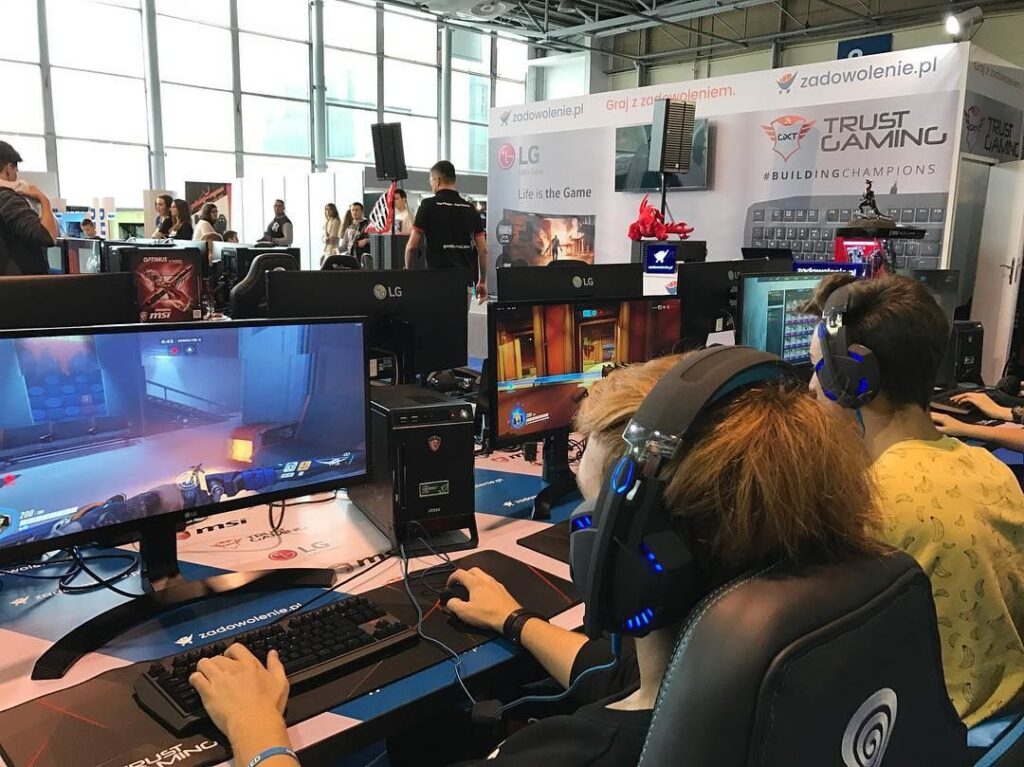
Esports betting represents perhaps the most interesting case study in tax-optimized product development. The younger demographic typically associated with esports shows higher tolerance for casino-style games, allowing operators to create integrated experiences that naturally drive customers toward higher-margin, tax-efficient products.
Technology Arms Race: Automation as Competitive Advantage
The complexity of operating profitably under Poland’s tax regime has sparked a technology arms race among licensed operators. Manual processes that might be acceptable in simpler regulatory environments become prohibitively expensive when every decision impacts tax liability.
Leading operators now deploy sophisticated risk management systems that calculate optimal bet acceptance strategies in real-time. These systems consider not just traditional factors like liability exposure and customer profiling, but also tax implications of different outcome scenarios. A bet that looks profitable from a pure odds perspective might be rejected if the algorithm determines it creates suboptimal tax efficiency.
Customer segmentation has become equally sophisticated. Advanced operators maintain detailed profiles that include not just betting patterns and preferences, but also tax-optimized product recommendations. The goal is to guide each customer toward the product mix that maximizes both customer satisfaction and operator tax efficiency.
The investment in technology infrastructure has created a significant barrier to entry for smaller operators. While the licensing process itself remains accessible, the operational complexity of tax-optimized gambling operations requires substantial technical capabilities that favor larger, well-capitalized operators.
Future Implications: Market Consolidation and Innovation Trends
The tax-driven competitive dynamics in Poland offer insights into the future of regulated gambling markets globally. As more jurisdictions implement revenue-based taxation, the Polish experience suggests several likely trends: increased market consolidation as scale advantages become crucial, greater integration between sports betting and casino products, and accelerated adoption of AI-driven optimization technologies.
The sustainability of the current tax rate remains an open question. While government revenues have exceeded projections, the competitive pressure from unlicensed operators continues to intensify. Industry observers expect potential rate adjustments by 2027, particularly if cryptocurrency adoption continues to facilitate offshore betting activity.
For operators considering entry into similar markets, the Polish experience demonstrates that success requires fundamental rethinking of traditional sportsbook business models. Pure sports betting operations struggle under high GGR tax burdens, while integrated gambling platforms that can optimize across multiple product categories maintain competitive viability.
The broader lesson extends beyond Poland: as gambling regulation matures globally, operators must develop sophisticated capabilities in tax optimization, product integration, and customer lifecycle management. The days of competing solely on odds and marketing spend are rapidly disappearing, replaced by a new era where mathematical precision and operational efficiency determine market winners.